
Profile / Background
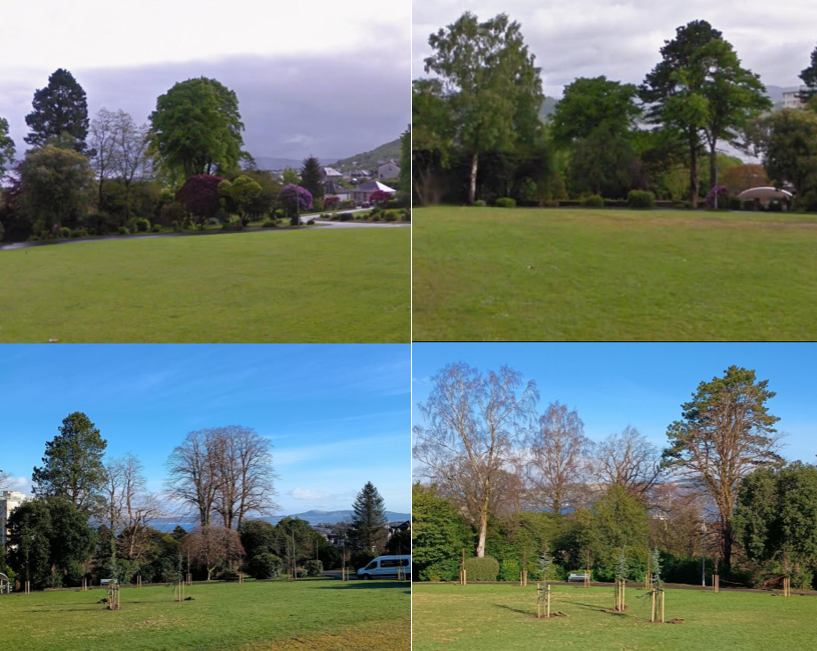
Gourock Park is a Victorian public park located in Gourock, Inverclyde. Green Action Trust partnered with Inverclyde Council to improve the park’s climate resilience through tree planting and biodiversity enhancements.
The park serves local communities, including nearby schools and residents living in some of Scotland’s most deprived neighbourhoods. Adaptation was a priority due to low tree canopy cover (19% compared with a 30% target), increasing heat exposure, flood risk, and limited habitat connectivity. These challenges align with local, regional and national ambitions to increase urban canopy cover, strengthen biodiversity and create more climate-resilient communities.
Climate Risks and Impacts
Before the project, several climate-related challenges affected the site:
Low canopy cover left paths and open spaces exposed to increasing summer heat, reducing comfort for park users and wildlife.
Surface water runoff was intensified by the park’s sloping topography and large areas of amenity grass, contributing to local flood risk.
Habitat fragmentation limited opportunities for wildlife movement and biodiversity.
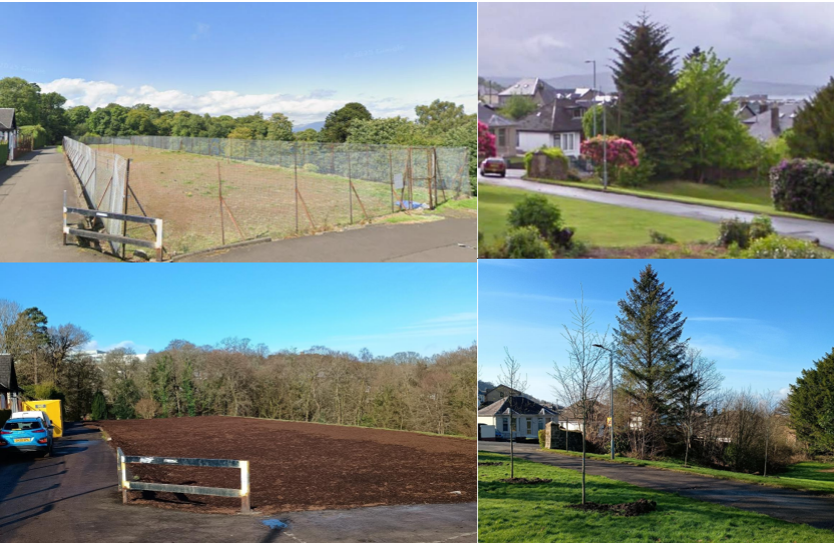
Derelict tennis courts reduced the quality and attractiveness of the park environment.
The park sits adjacent to residential and commercial areas vulnerable to flooding and serves communities that may be disproportionately affected by climate impacts.
Adaptation Actions Taken
Green Action Trust and Inverclyde Council developed and delivered a nature-based adaptation scheme focused on increasing green infrastructure and biodiversity.
Key actions included:
- Designing and implementing avenue tree planting along main access routes.
- Planting 52 new trees (10 extra-heavy standard trees and 42 standard trees).
- Removing redundant tennis court infrastructure.
- Creating approximately 2,068m² of new wildflower meadow habitat.
- Enhancing habitat connectivity and biodiversity throughout the park.
The project prioritised actions that would simultaneously address overheating, surface water management and ecological resilience.
Support and Collaboration
The project was delivered through a partnership between:
Funding was secured from multiple sources:
- Scottish Government Nature Restoration Fund (£25,000)
- Scottish Government Climate Adaptation Funding (£15,000)
- Inverclyde Council (£18,993.53)
Total project cost: £58,993.53.
Outcomes / Benefits
The project has delivered a range of adaptation and community benefits:
- Reduced overheating: New trees will provide increasing shade as they mature, improving comfort for visitors and wildlife during hotter weather.
- Improved water management: Trees and wildflower meadows increase rainfall interception, soil infiltration and water retention, helping reduce surface water runoff.
- Enhanced biodiversity: New habitats provide forage and stepping-stone corridors for pollinators and other wildlife.
- Improved park quality: Removal of derelict infrastructure has created a more attractive and welcoming environment.
- Community benefits: Positive feedback was received from dog walkers and other regular park users following completion of the works.
Reflections
The project demonstrated how nature-based solutions can address multiple climate challenges within a single urban greenspace.
One key success was the reuse of existing tennis court blaes material beneath the new meadow area, avoiding disposal costs and providing suitable low-nutrient conditions for wildflower establishment.
A challenge arose when restrictions on oak tree supply limited availability of the planned stock. Inverclyde Council adapted by sourcing suitable alternative tree species locally, ensuring delivery remained on schedule.
Next Steps / Future Plans
The project includes:
- One year of wildflower meadow maintenance.
- Two years of aftercare for newly planted trees to support successful establishment.
Building on strong community feedback, there is potential for further tree planting in the park, particularly within larger amenity grass areas that could support additional woodland and habitat creation, subject to future funding.
Learning / Replication Tips
Key lessons for organisations considering similar adaptation projects include:
- Nature-based solutions can deliver multiple benefits, including cooling, flood management and biodiversity enhancement.
- Reusing existing site materials can reduce costs and environmental impacts.
- Flexibility in species selection helps overcome supply-chain challenges.
- Strong partnerships between local authorities and environmental organisations are essential for successful delivery.
- Urban parks offer valuable opportunities to build climate resilience while improving community wellbeing and access to nature.