
Profile / Background
The Summerhill Road Drainage Upgrade project was delivered in Drumchapel, Glasgow, to reduce the risk of flooding to homes on Summerhill Road. Residents had experienced repeated internal property flooding over the previous decade, highlighting the need for investment in climate-resilient drainage infrastructure.
The project focused on addressing surface water flooding and improving the area’s ability to cope with increasingly intense rainfall events.
Climate Risks and Impacts
Drumchapel was identified by SEPA as a community potentially vulnerable to flooding.
Investigations found that surface water accumulated at a low point within the catchment and could not drain away quickly enough due to limited road drainage capacity. Although capacity existed within the combined sewer network, undersized road gullies and connecting pipes restricted flows, leading to flooding of nearby residential properties.
The recurring flooding caused damage to homes and created significant anxiety for residents during periods of heavy rainfall.
Adaptation Actions Taken
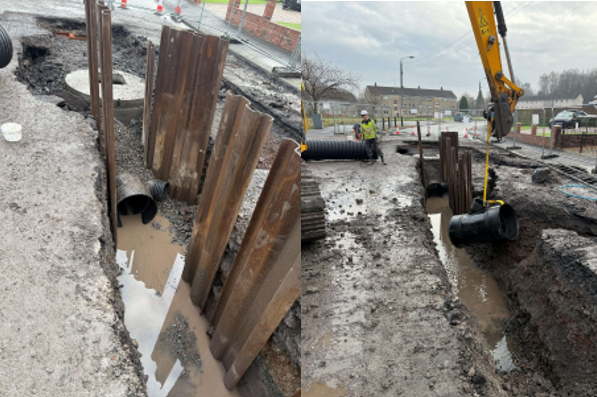
The project delivered a targeted upgrade to the local drainage network to increase its capacity and reduce flood risk.
Key actions included:
- Hydraulic modelling to identify the flooding mechanism and determine appropriate solutions.
- Design and construction of an enhanced road drainage system.
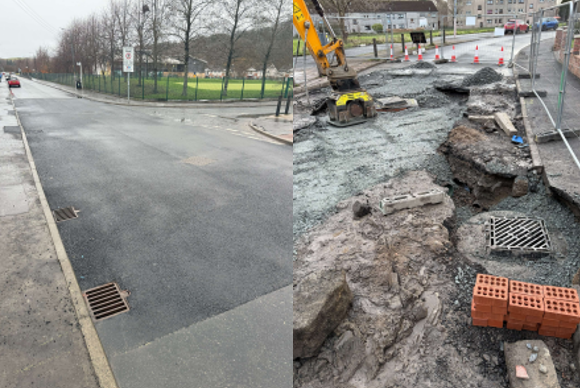
- Installation of larger road gully grates.
- Enlargement of pipe connections between the road drainage system and the combined sewer network.
The drainage improvements were designed specifically to increase the rate at which surface water could be removed during heavy rainfall events.
Support and Collaboration
The project was delivered through collaboration between several organisations and community stakeholders:
- Glasgow City Council (Client and funder)
- Verture / Climate Ready Clyde (Funder)
- Summerhill Road Flood Action Group
- AECOM (Design and Contract Management)
- Cairn Construction (Contractor)
Engagement with local residents through the Summerhill Road Flood Action Group helped ensure that community experiences informed the project. Collaboration with Scottish Water was facilitated through the Metropolitan Glasgow Strategic Drainage Partnership.
Outcomes / Benefits
The project has successfully reduced the risk of flooding to properties on Summerhill Road.
Key benefits include:
- Improved resilience to surface water flooding.
- Reduced likelihood of internal property flooding during heavy rainfall.
- Greater protection for homes and property.
- Improved wellbeing through reduced anxiety and stress for residents when severe weather is forecast.
The primary beneficiaries are local residents who had previously experienced repeated flooding incidents.
Reflections
Strong partnership working was critical to achieving a practical and deliverable solution. Existing positive relationships with Scottish Water helped support successful negotiations and project delivery.
A key challenge emerged during construction when previously unidentified underground utilities were encountered despite pre-construction surveys. As a result, the design had to be modified and the planned increase in drainage capacity could not be fully achieved.
Future projects could reduce this risk by undertaking trial trench investigations and using more detailed utility mapping to better understand below-ground constraints before construction begins
Next Steps / Future Plans
Following the success of the drainage upgrade, a second phase of work is proposed to further reduce flood risk in the area.
The next stage would involve the construction of a flood storage basin on a nearby vacant and derelict site, providing additional capacity to manage surface water during extreme rainfall events.
Learning / Replication Tips
Key lessons from the project include:
- Understanding the specific flooding mechanism is essential before selecting adaptation measures.
- Hydraulic modelling can help identify the most effective and cost-efficient solutions.
- Early collaboration between local authorities, water utilities and community groups improves project outcomes.
- Detailed investigation of underground utilities can help avoid costly changes during construction.
- Even relatively targeted infrastructure upgrades can deliver significant reductions in flood risk and improve community confidence and wellbeing.